
Direct Booking SEO: Find Keywords That Convert in 2026
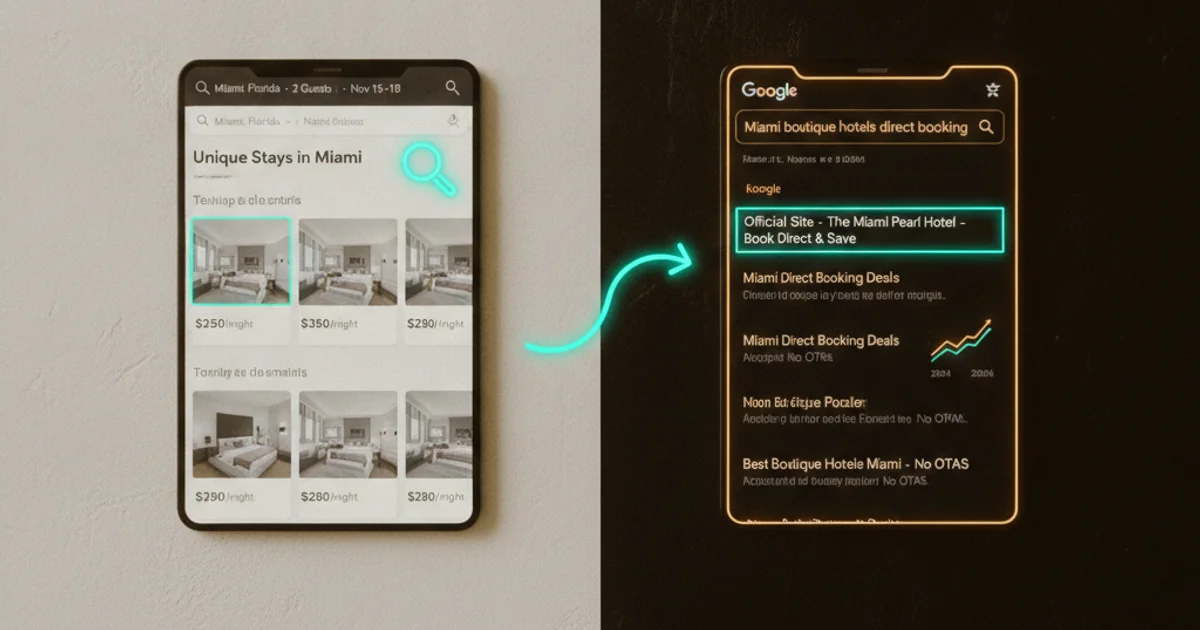
When Was the Last Time You Googled Your Own Vacation Rental?
Go ahead, I'll wait. Open an incognito window and type in how you think a guest would find your property. Something like, "cabin in Asheville" or "beach house in Destin." If the answer is "never" or "a long time ago," you're not alone. In my experience, about 70% of hosts with direct booking sites never check where they actually rank on Google. When they finally do, most are shocked to find they're completely invisible, buried under pages of Airbnb, Vrbo, and Booking.com results.
Here's the hard truth: the SEO advice you've read for your Airbnb listing is almost useless for your direct booking website. They are two completely different games. Relying on OTA-style keywords for your own site is like trying to play soccer with a basketball. It just doesn't work.
In this guide, I'm going to show you the exact process I use to find high-intent vacation rental keywords that actually drive direct bookings in 2026. We'll skip the generic advice and focus on what moves the needle, so you can stop being invisible and start capturing commission-free revenue.
Why Your Airbnb Keywords Don't Work for Google
The biggest mistake hosts make with direct booking SEO is copying their Airbnb title and pasting it onto their website's homepage. An Airbnb search and a Google search have fundamentally different user intents. On Airbnb, a guest searches for "Asheville" and uses filters for price, dates, and amenities. The platform does the heavy lifting. On Google, a guest is looking for a specific solution. They don't just search "Asheville cabin"; they search "Asheville cabin with mountain view and hot tub" or "pet-friendly three-bedroom cabin near downtown Asheville."
Trying to rank for broad, two-word phrases is a losing battle against the multi-billion dollar ad budgets of the OTAs. The counterintuitive truth is that you don't want to compete with them. You want to find the specific, long-tail searches they ignore. According to research from AirDNA, a strong direct booking site allows hosts to optimize for these niche searches and build their own brand visibility. Your goal isn't to get all the traffic; it's to get the right traffic. A great starting point is using a Google Listing Rank Checker to see exactly where you stand before you start optimizing.

Finding Your "Money" Keywords: A 3-Step Process
Finding keywords that convert is a process of starting broad and getting surgically specific. Here's the simple, three-step framework I walk hosts through every day.
Step 1: Brainstorm Your Seed Keywords
Forget about search volume for a minute. Start by describing your property from a guest's perspective. What makes it special? What problem does it solve? Your seed keywords are combinations of your location, property type, and top amenities. For example:
- Location + property type: "mountain cabin Tennessee"
- Location + amenity: "Smoky Mountains cabin with hot tub"
- Location + guest type: "family-friendly beach house Florida Panhandle"
- Occasion + location: "romantic getaway cabin Asheville NC"
Write down every combination you can think of. Don't filter yet. The goal in this step is quantity, not quality.
Step 2: Expand with Long-Tail Variations
Long-tail keywords are phrases of three or more words that are highly specific. They have lower search volume, but they convert at a dramatically higher rate because the searcher knows exactly what they want. A guest searching "pet-friendly cabin with fenced yard near Gatlinburg" is far closer to booking than someone who types "Tennessee cabin."
Here are three free ways to find long-tail variations:
- Google Autocomplete: Type your seed keyword into Google and look at the dropdown suggestions. These are real searches people are making right now.
- People Also Ask: Scroll down the Google results page and look at the "People Also Ask" box. These questions reveal the exact language guests use when planning a trip.
- Related Searches: At the bottom of the Google results page, you'll find eight related search suggestions. These are gold for finding keyword variations you never would have thought of.
Step 3: Validate and Prioritize
Once you have a list of 20 to 30 keyword ideas, it's time to figure out which ones are worth targeting. You're looking for three things: reasonable search volume, low competition, and high commercial intent. Free tools like Google Keyword Planner and Ubersuggest can give you baseline volume data. But the most important filter is intent. Does the keyword suggest the person is ready to book, or are they just browsing? Keywords with words like "rental," "book," "stay," and specific dates or locations signal high intent. Keywords with words like "ideas," "tips," or "guide" signal informational intent, which is useful for blog content but not your booking page.
The Local SEO Advantage Most Hosts Miss
Here's a secret weapon that most vacation rental hosts completely overlook: local SEO. While you're trying to compete nationally for terms like "beach vacation rental," your real opportunity is to dominate hyper-local searches in your specific area. Think about the micro-geography around your property. Are you near a specific lake, trail, state park, or neighborhood? Are you walking distance to a famous attraction?
Phrases like "cabin near Clingmans Dome" or "house walking distance to Rosemary Beach" are searches with almost zero competition from the big OTAs. These are the keywords where a well-optimized direct booking site can rank on page one within weeks, not years. Make sure your Google Business Profile is fully optimized, as it directly feeds into these local search results and can drive significant direct booking traffic.
How to Map Keywords to Your Website Pages
One of the most common mistakes I see is hosts trying to cram every keyword onto their homepage. This dilutes your relevance for everything. Instead, think of your website as a keyword map where each page owns a specific topic.
- Homepage: Your primary location and property type keyword. Example: "Luxury Cabin Rental in Asheville, NC."
- Amenities Page: Keywords focused on your top features. Example: "Asheville Cabin with Private Hot Tub and Mountain Views."
- Area Guide / Blog Posts: Long-tail informational keywords. Example: "Best Hikes Near Asheville for Families" or "Things to Do in Asheville in Winter."
- FAQ Page: Question-based keywords from the "People Also Ask" box. Example: "Is Asheville pet-friendly for vacation rentals?"
This structure tells Google exactly what each page is about and dramatically increases your chances of ranking for multiple keywords across your site.
Tracking Your Rankings So You Know What's Working
Keyword research without tracking is like driving without a speedometer. You need to know if your efforts are actually moving you up the search results. Set a reminder to check your rankings every two to four weeks. Look for keywords where you've moved from page three to page two, or from position fifteen to position eight. These incremental gains compound over time and eventually lead to page one rankings that drive consistent, commission-free bookings.
The most important thing is to start. Pick five keywords from your research, optimize your homepage and one other page for them, and then measure what happens. Direct booking SEO is not an overnight solution, but for hosts who commit to it, it becomes their most powerful and cost-effective marketing channel.
Putting It All Together
The path to direct booking success through SEO comes down to three things: finding the right keywords your ideal guests are actually searching for, creating pages on your website that are genuinely optimized for those terms, and tracking your progress so you can double down on what works. Stop trying to out-spend the OTAs on broad terms. Instead, own your niche, dominate your local area, and build a direct booking engine that works for you around the clock.
Want to dive into your booking analytics and uncover what drives bookings?
Get StartedNewsletter
Get hosting tips in your inbox
Strategies, trends, and insights. No spam.