
Valencia's STR Ban: A Wake-Up Call for Hosts Everywhere

I have a question for you. If your city council banned short-term rentals tomorrow, would you still have a business? Not just a listing, but a business?
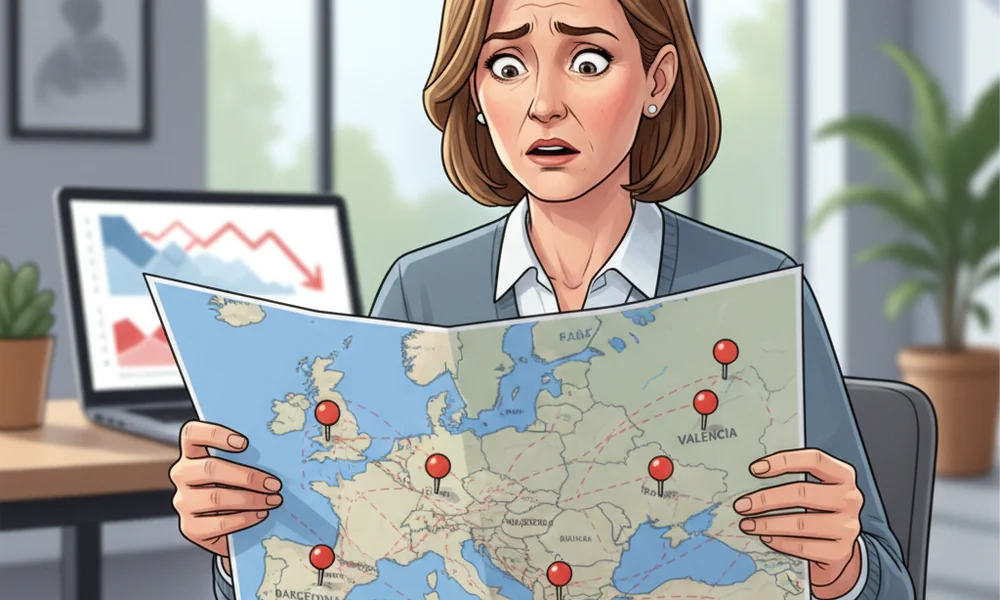
It sounds dramatic, but for hosts in Valencia, Spain, this is no longer a hypothetical. They just joined a growing list of major European cities cracking down hard on vacation rentals. For many, the answer to that question is a terrifying “no.”
This news isn't just about Valencia. It’s the latest domino in a long line, and it’s a clear signal for every host, everywhere. Relying 100% on platforms like Airbnb or VRBO is like building a house on rented land. It’s time to talk about building on land you own.
The Domino Effect: From Paris to Valencia
Let's be clear: the regulatory pressure on short-term rentals is a predictable, global trend. According to a recent report, Valencia is now part of a club that includes Barcelona, Amsterdam, Lisbon, Berlin, and Florence—all cities that have capped licenses, frozen new applications, or increased enforcement.
Even Paris, a city that has regulated STRs for years, is intensifying its crackdown in 2026. The reasons are almost always the same: concerns over housing affordability, neighborhood character, and the pressures of overtourism.
It’s easy for a host in, say, Scottsdale or the Smoky Mountains to see this as a distant European problem. That’s a mistake. City councils worldwide look to these major destinations as a blueprint. What happens in Paris and Valencia doesn't stay there; it becomes a case study for regulators everywhere.
Why “Platform Diversification” Isn’t the Answer
The conventional wisdom for years has been to “diversify your listings.” If you’re on Airbnb, you should also be on VRBO and Booking.com. And that’s not bad advice, but it's a 2022 strategy for a 2026 problem.
Here’s the counterintuitive truth: diversifying across OTAs is a false sense of security against regulatory risk.
When a city like Valencia freezes new licenses, it doesn’t just affect Airbnb. It affects all platforms. You might have three storefronts, but they’re all on the same street that the city just decided to close for business. Your risk isn't diversified; it's just spread across three nearly identical points of failure.
The Real Moat: Your 3-Step “Regulation-Proofing” Plan
So, if platform diversification isn't the answer, what is? Building assets you actually own. Your direct booking website, your email list, your social media audience, and your Google presence are things no city council or OTA algorithm can take from you. They form a protective moat around your business.
Here’s a practical, 3-step plan to start building that moat today.
Step 1: Plant Your Flag on Google
When was the last time you Googled “vacation rental in [your city]”? The results are no longer just Airbnb and VRBO links. Google has its own powerful travel ecosystem, and you need to be part of it.
- Claim Your Google Business Profile: This is non-negotiable in 2026. It's a free listing that lets you show up on Google Maps and in local search results. It’s your digital storefront on the world's biggest search engine.
- Track Your Rank: You can't improve what you don't measure. I tell every host to use a tool like our Google listing rank checker to see where their direct booking site (or even their Airbnb URL) appears. Are you on page 1 or page 10? Knowing this is your starting point.
Step 2: Start Collecting Guest Emails Today
An email list of past guests is one of the most valuable assets you can own. These are people who already know, like, and trust your property. They are your most likely source of repeat and referral bookings—the holy grail of a direct booking strategy.
You don't need a fancy setup. The easiest method I've seen is also the simplest: put a QR code in your rental for WiFi access. We built a free WiFi QR generator for this exact purpose. A guest scans the code, you can ask for their email on a simple landing page, and they get instant access. You get a direct line of communication for future marketing that bypasses the OTAs entirely.
Step 3: Become the Local Expert
People don't just book a property; they book a destination. Your marketing should reflect that. Stop just posting about your thread count and start creating content about your location.
Write a simple blog post on “Our 5 Favorite Hiking Trails Near [Your Town]” or create an Instagram guide to the “Best Family-Friendly Restaurants.” This content attracts potential guests at the top of their planning funnel. They come for the tips and discover your property in the process.
Inside Hostmatic, I constantly see that our most successful direct-booking hosts have a blog. Their analytics show that these local guide posts often drive more qualified traffic over the long term than any single social media blast.
The Future is Owned, Not Rented
The era of passive, “set it and forget it” hosting is ending. The hosts who thrive in the late 2020s will be the ones who act like true business owners, not just listing managers. They will be marketers who build brands and cultivate their own audiences.
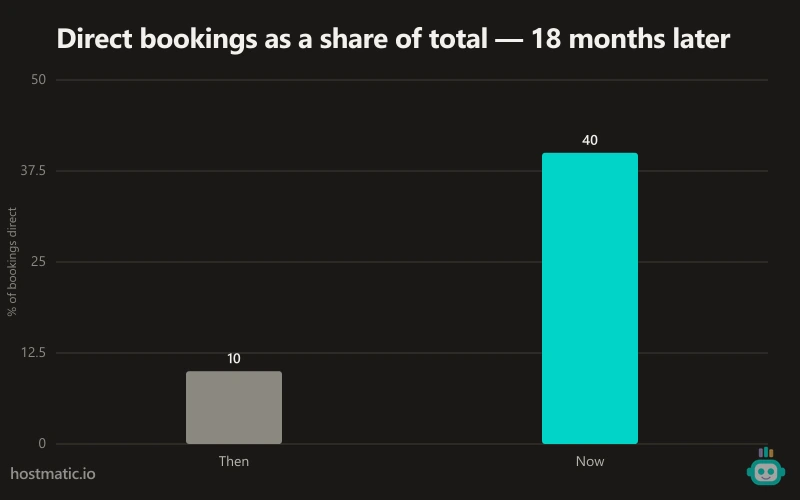
Data is your best defense in this new landscape. A host I work with in a regulation-heavy market saw the writing on the wall two years ago. We watched her `direct vs. OTA comparison` chart in Hostmatic. She started with 95% of her bookings from OTAs. By focusing on her blog and building an email list, she’s now at 40% direct. Her business is stronger, more profitable, and far more resilient.
The news from Valencia isn't a death knell for the industry. It's a catalyst. It's the urgent push we all need to stop renting our audience from the OTAs and start building businesses that can withstand the inevitable shifts in the market.
Actionable Takeaways
- Don't Panic, Prepare: View the Valencia regulations not as a threat, but as a clear sign of where the industry is headed. Use it as motivation to build a more resilient business.
- Own Your Audience: Your primary goal should be to build assets you control: a Google Business Profile, an email list of past guests, and a social media following. These are immune to both algorithm changes and city regulations.
- Start Small, Start Now: You don't need a massive marketing budget. Claim your free Google profile today. Create a WiFi QR code this afternoon. Write one helpful blog post this weekend. Small, consistent actions build a powerful moat over time.
Building a resilient, multi-channel business means making data-driven decisions. Understanding where your direct booking traffic comes from, which marketing efforts actually convert, and where you rank on Google are no longer optional skills—they’re essential for survival and growth. This is precisely why we built Hostmatic: to give hosts the clarity they need in an increasingly complex market.
Want to dive into your booking analytics and uncover what drives bookings?
Get StartedNewsletter
Get hosting tips in your inbox
Strategies, trends, and insights. No spam.